
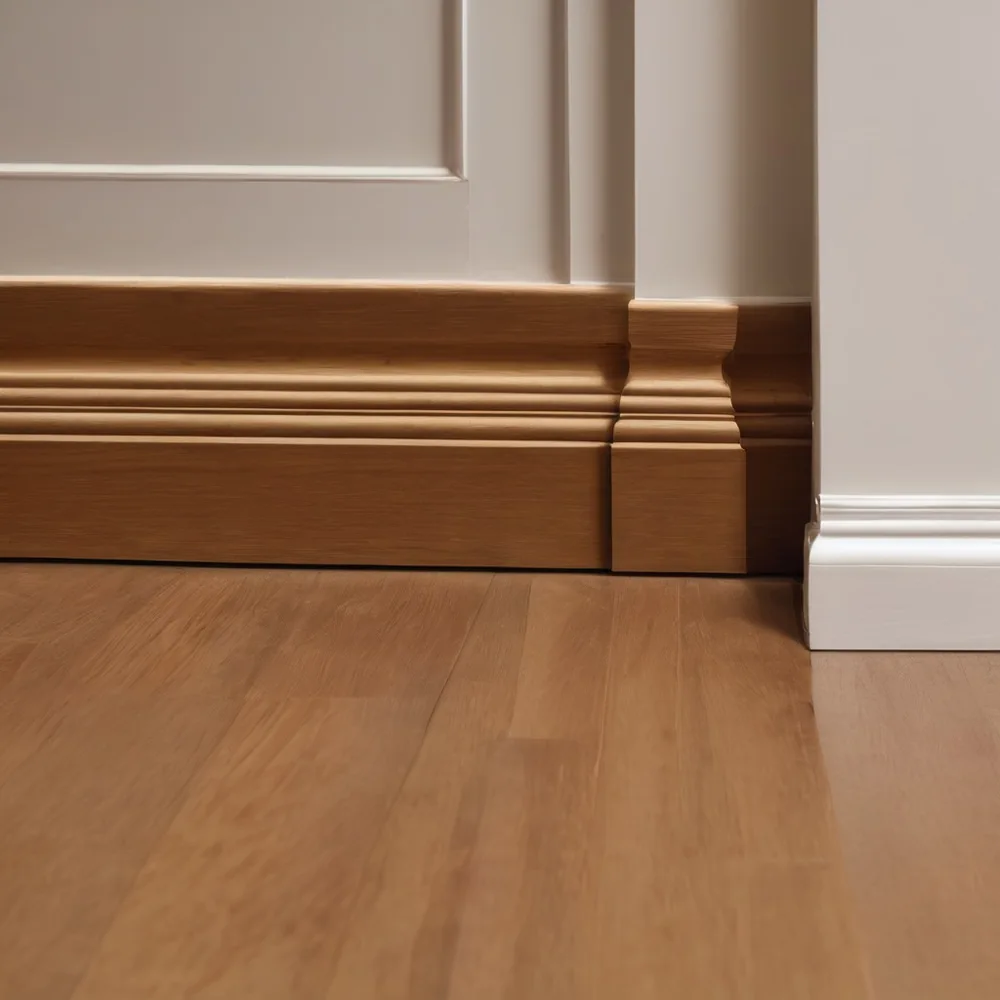
Every trim package starts with one decision: will the trim be painted or stained? The answer changes the material, how carefully every joint must be fitted and what the room looks like when it is done.
Paint-grade trim
Paint-grade trim is made to be covered. The usual materials are primed MDF and finger-joint pine, which are stable, straight and affordable. Small gaps and nail holes are filled and caulked before painting, so the finished surface looks seamless.
- Most common choice for baseboard, casing and crown in Florida homes
- Primed MDF resists warping and is easy to paint, but should be kept away from standing water
- Finger-joint pine is real wood and holds fasteners well
Stain-grade trim
Stain-grade trim is solid wood chosen for its grain, such as oak, poplar or maple. Because the stain shows everything, joints have to be tight without relying on filler, boards are matched for color and grain, and nail holes are kept to a minimum.
- Common on stair treads, handrails and newel posts
- Used for libraries, offices and craftsman or traditional interiors
- Takes more time to install and costs more in material
Mixing the two
Many Central Florida homes combine both: painted risers, skirts and balusters with stained treads and handrail, or painted trim throughout with one stained feature wall or built-in. Mixing works well when the stained pieces are the ones people touch or look at most.
Humidity and Florida homes
Wood moves with humidity. Letting trim acclimate inside the conditioned house before installation, and keeping the air conditioning running, reduces open joints later. This matters most for stain-grade work, where a joint cannot be hidden with caulk.
Which should you choose?
Choose paint-grade for a clean, consistent look and a lower budget. Choose stain-grade where you want the wood to be the feature and the budget allows the extra time. If you are unsure, send a few photos of the style you like and we will suggest an approach.